When Agents Become the User
March 31, 2026
If you are feeling suffocated by the advancement of AI, you are not alone. At the beginning of 2026, AI is no longer just a chatbot or a search engine alternative, like what it was in 2023. Today, AI agents can not only write code, but also send emails, manage files, browse websites, etc. Some autonomous AI agents, such as OpenClaw, can even run 24/7 without any human intervention.
Now AI agents are much more capable of doing tasks that were previously done by humans operating software, what will that look like for future software?
The Layer Flip
To answer that question, let's take a quick look at the current landscape of the software world. Up until now, most software has a GUI (Graphical User Interface) that allows human users to do different tasks, ranging from ordering pizza to managing employee payrolls. We need GUI because software is so complex that we need to hide and transform that complexity into something that human users can easily understand. And this is what UX (User Experience) Design is all about: making sure software is easy and intuitive to use for human users.
However, now we have AI agents, and that might change everything.
AI agents are not like humans — they don't need GUI. They can directly operate the software by writing code. And humans can talk directly to the AI agent using just…words — the fundamental form of human interaction.
In other words, from the human's perspective, AI agents will be the new "GUI" that sits between humans and software; from the software's perspective, AI agents will be "proxy users" that use the software in place of humans.
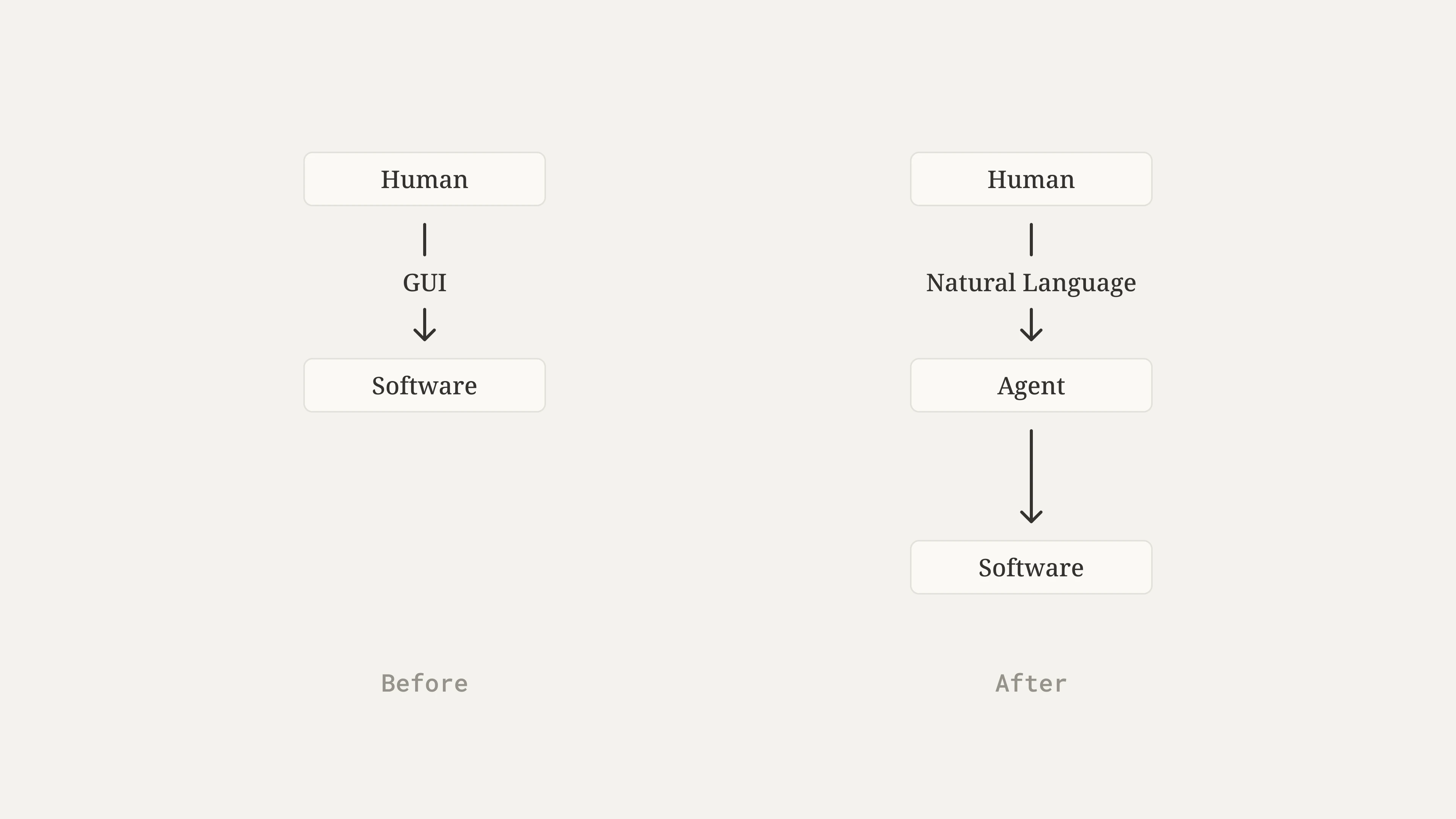 [fig 1] Software layers before (left) and after (right) AI agents.
The Topology Shift
Now let's zoom out and see what the entire internet will look like once AI agents become proxy users in place of humans.
The current internet, or what we call Web2, is a mesh network topology where human users are connected to each other. Examples are Facebook, Uber, Reddit and etc, where more people joined, more valuable the platform became, even if those were just free users. This is the classic Network Effect.
The AI era, however, is a star topology. As we discussed earlier, humans will connect to AI agents, and those agents will be the proxy to connect with the world. The human-to-human links in the Web2 era might be dissolved in this new era. Therefore, more users doesn't always do better for platforms (except for AI companies that can collect more user data for training). Attracting and keeping AI agents for using the software will be the new moat.
But here's the twist: the network effect won't disappear, it will just migrate from human-to-human network to agent-to-agent network — agents negotiate with other agents, share context, route tasks… The network effect just moved up a layer.
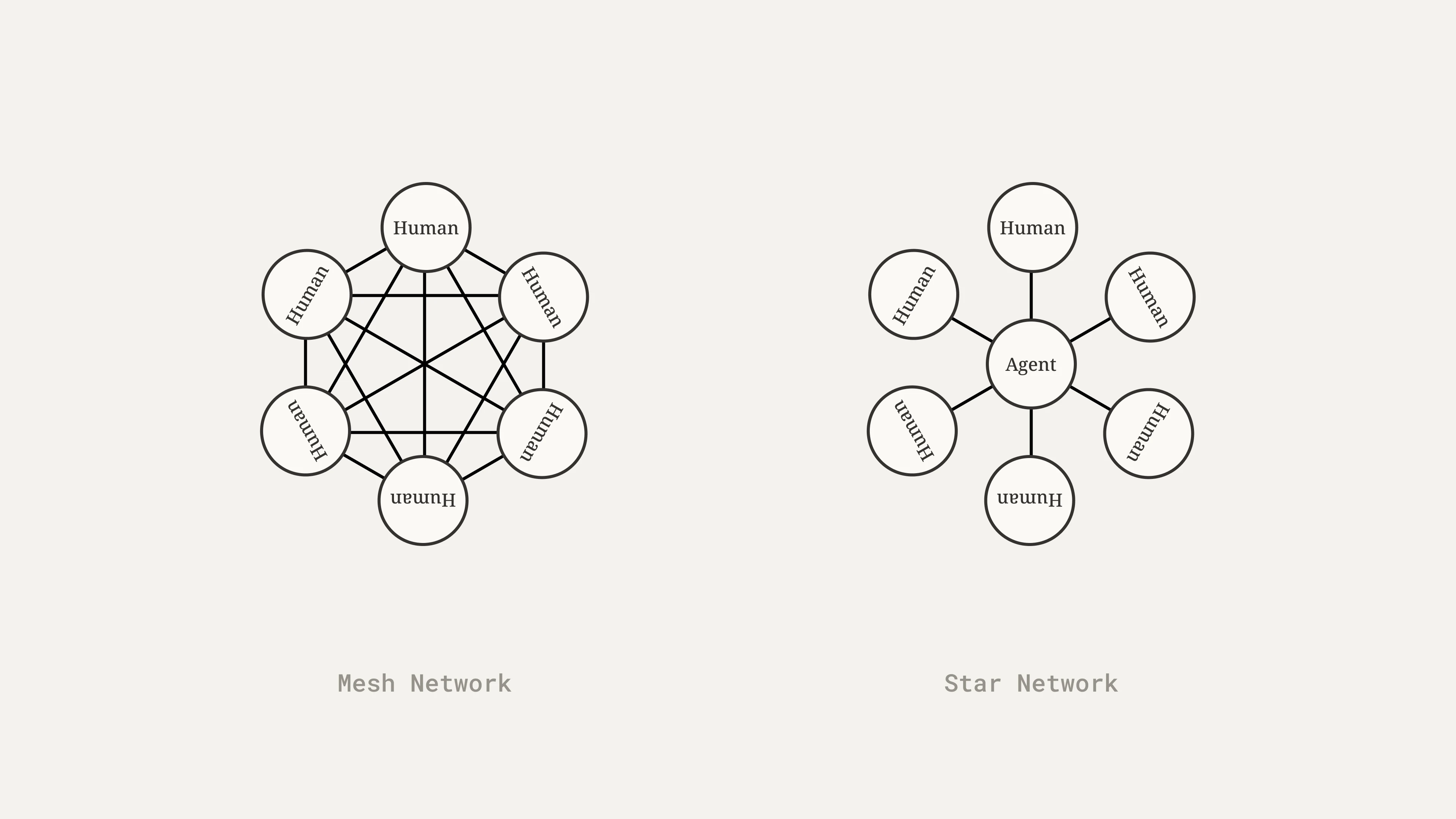 [fig 2] Network topology comparison: Mesh Network (left) and Star Network (right).
Who Thrives, Who Perishes
This is where it gets personal: if AI agents are our proxy, what will the future look like for software? What's left for us humans? Who thrives and who perishes?
I think the dividing line is this: anything built around getting things done gets absorbed by agents. Anything built around human experience survives.
Task-oriented software — project management tools, email clients, enterprise tools — those are primary candidates for AI agents take over as proxy users. After all, no one enjoys updating a Jira ticket; AI agents can do it better and much faster.
Experience-oriented software — Pinterest, Spotify's discovery feed, a beautifully designed online store — those will survive since the point was never efficiency. The point was browsing, discovering, and feeling. Humans will remain the main users. An AI agent can't browse for vibes, at least not yet.
The same line cuts through community platforms. Communities built around information exchange — Stack Overflow, troubleshooting forums, how-to subreddits — lose their advantages when an AI agent can answer better and faster than a stranger on the internet. But communities built around identity, belonging, and shared experience will still be unique to our human experience. Things like lifestyle sharing, niche hobby discords, networking platforms… those are not about information, they are about being seen by other humans. And AI agents cannot replace that either.
Human-facing Software Like Art
The surviving world of human-facing software might be smaller. But it's a world where taste, craft, and emotional resonance matter more than ever. Think of it as software becoming more like art — fewer people will make it, but the ones who do will need to be extraordinary.
What To Do Now
So if you're a builder, a designer, or anyone working in tech, what do you do with this?
If you are a builder, just keep one thing in mind: your future users will be AI agents. So you need to shift your priorities. Instead of building a beautiful UI, you need to focus on how to better let AI agents find you and understand how to use your software.
If you are a designer who still wants to focus on the human experience, your bar will be so much higher now, and taste will be your new moat. You have to be extraordinary in delivering world-class GUIs that will make the human user obsessed — enough that they will pay for the experience, not the task being done.
And for everyone else, here is something that we need to understand before getting swallowed by those AI anxieties: by far, AI can execute really well, but AI cannot "want" things. They don't wake up at 3 am with a burning idea. They don't feel the itch to solve a problem nobody asked about. The most valuable human skill in this era isn't doing — it's wanting. Knowing what's worth building, why it matters, and being able to judge whether it's good.
The value of pure execution is dropping to near zero. The value of desire, direction, and taste is going up.
So move toward taste. Move toward judgment. Move toward the things that make you irreplaceably human.
The agents will handle the rest.